
"tropical plants"
6000 article(s) found

Introduction to the flavor characteristics of tropical rain forest certified coffee from COE Cup Changshengjun, Honduras-Saint Vincent treatment Plant
For the exchange of professional baristas, please follow the coffee workshop (Wechat official account cafe_style) Product name: Honduras St. Vincent processing Plant Tropical Rainforest Certification SHG (Honduras San Vicente Rain Forest SHG) production area: Santa Barbara (Santa Barbara) Pena Blanca Town processing Plant: St. Vincent processing Plant (Beneficio San Vicente)
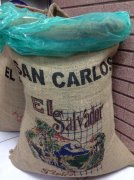
El Salvador Warrior Manor SAN (Tropical Rain Forest Certified Manor) Coffee Flavor and Taste description
For the exchange of professional baristas, please follow the coffee workshop (Wechat official account cafe_style) 510,Salvadoran Warrior Manor-Hot Spring washed Coffee San Carlos Warrior Manor is located in Canton Potrero Grande Arriba, where El Salvador's famous coffee estate is located. The farm is close to the summit of Mount Santa Ana in Santa Ana. The Warrior Manor has amazing scenery and miniature style.

What is a coffee belt? How to plant coffee trees? Where is it suitable for planting?
Professional coffee knowledge exchange more coffee bean information please follow the coffee workshop (Wechat official account cafe_style) what is the coffee belt? How to plant coffee trees? Where is it suitable for planting? The coffee belt refers to the area where coffee beans are grown in the latitudes of the earth. Because it happens to form a ribbon, it is called a coffee belt. This coffee belt is between the Tropic of Cancer and the Tropic of Cancer.

About Coffee History Origin Culture and Spread
Coffee tree, is a tropical plant, evergreen shrubs, growing in the equator, north and south latitude 25 degrees each, that is, within the Tropic of Cancer region. The tropical tropics and the equator are the world coffee growing belt. The growing conditions require abundant rainfall and humid climate. The suitable altitude is about 600~1500 meters. The annual rainfall is 1500~2000 mm. Mild days alternate with cool nights.

Strange Cafe in Guatemala: tropical jungle with vintage cars to create an interesting space
Professional baristas Please follow the Coffee Workshop (official Wechat account cafe_style) Madero Caf é (Madero Cafe), located on the busiest street in Guatemala City, Central America, with its unique eye-catching exaggeration and unique interior design, it has become a great place for local relaxation and relaxation. On the exterior building of the cafe, there are four old cars of very different colors breaking through the wall.

Geographical distribution of coffee bean producing areas and planting techniques of coffee trees
Geographical distribution editors the paradise of coffee growth is mostly located in countries with alpine terrain between the Tropic of Cancer. It is native to tropical Africa and is introduced and cultivated in South and Southwest China. [2] the cultivation technology editor requires that the origin of the coffee tree [4] is in Ethiopia in Africa. In botany, the coffee tree belongs to the evergreen tree of the coffee subgenus of Rubiaceae, and the so-called coffee beans are actually

Description of Brazilian Coffee Flavor with smooth taste introduction to Culture of planting Environment of varieties in producing areas
In terms of natural conditions, Brazil is in the tropics, with a tropical rain forest climate in the north, hot and humid all the year round, suitable for tropical crops, coffee trees are sunny crops, and sufficient sunlight is the condition for their growth. Historically, Brazil has been a Portuguese colony for a long time. In order to meet the needs of Western Europe, Brazil has been planting single crops for a long time and developing tropical plantation economy.

Tropical Rainforest Alliance Certification and Fair Trade Coffee Organization
Tropical Rainforest Alliance Certification and Fairtrade Coffee Organization, to put it simply, is to enable us consumers to continuously and reasonably produce safe and delicious coffee; therefore, Fairtrade Coffee advocates that producers must be paid the appropriate equivalent price when dealing with producers in order to maintain a good partnership and ensure that producers have sufficient funds to continue production. The cultivation of coffee

Introduction to the planting Base Map of Bourbon Rivida Bean location conditions of Hillado Coffee Bean in Brazil
Brazil Hilado Coffee Bean Bourbon Rivida planting Base Map introduces that coffee was introduced into Brazil after the 18th century. In 1727, coffee was introduced into Port Belem, Brazil from Guyana, and has since settled in Brazil. It is mainly distributed in the southeast coastal areas of Brazil, namely, Sao Paulo, Parana, San Esprito and Minas Gerais. From the end of the 18th century to
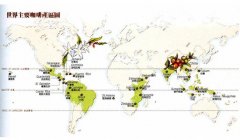
Coffee growing belt
Most of the coffee producing areas in the world are located in the tropics between the Tropic of Cancer and the Tropic of Cancer, which we call the "coffee belt" or Coffee Belt or Coffee Zone in English.

Dollhouse Tropical Oasis Cafe: MADERO CAFé in Guatemala
Professional barista communication, please pay attention to coffee workshop (Weixin Official Accounts cafe_style ) confined space, fingers up and down, frowning waiting, helplessness, we have all had. Especially when placed in the heat and the sea of cars, the car body is like a tortoises in the savannah, and the tortoises move slowly. Traffic jam, so that the left and right view of the scenery only boring, only the blue sky outside the window, can imagine stretch

What is the flavor of coffee beans in Africa? the aroma of Essel beans is always missed in my dreams.
Professional coffee knowledge exchange more coffee bean information please follow the coffee workshop (Wechat official account cafe_style) front street-Ethiopian Coffee introduction Coffee trees are tropical plants planted in warm places. A coffee belt refers to an area where coffee beans are grown, so it is called a coffee belt because it happens to form a ribbon. This coffee belt is between the Tropic of Cancer and the Tropic of Cancer.

A brief introduction to the development of the planting base map of Bourbon Rivida beans under regional conditions of Hillado coffee beans in Brazil
Brazil makes full use of the tropical geographical environment and attaches importance to the production and sale of coffee, so that the output, export volume and per capita consumption of coffee have been ranked first in the world for many years, and have been praised as the coffee kingdom. But the hometown of coffee is not in Brazil, but in Ethiopia in Africa.
Important conditions for planting Coffee of Fine Coffee
There is a noun called coffee belt. There are more than 60 coffee producing countries in the world, most of which are located in the tropics and subtropics between the Tropic of Cancer (latitude 2326). This coffee growing area is called coffee belt (Coffee Belt) or coffee area (Coffee Zone). The annual average temperature of the coffee belt is above 20 ℃, because the coffee tree is a tropical plant, if the temperature is below 20 ℃.
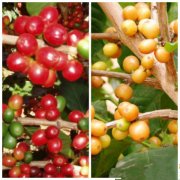
Important conditions of Coffee cultivation basic conditions of Coffee Tree planting
There is a noun called coffee belt. There are more than 60 coffee producing countries in the world, most of which are located in the tropics and subtropics between the Tropic of Cancer (latitude 2326). This coffee growing area is called coffee belt (Coffee Belt) or coffee area (Coffee Zone). The annual average temperature of the coffee belt is above 20 ℃, because the coffee tree is a tropical plant, if the temperature is below 20 ℃.

The location conditions of coffee cultivation can be upgraded by the poor experience of widely growing coffee.
Professional coffee knowledge exchange more coffee bean information please follow the coffee workshop (Wechat official account cafe_style) front street-introduction to the coffee growing belt the location of the global coffee belt is mainly between the Tropic of Cancer where precipitation is abundant most of the world's coffee producing areas are located in the tropics between the Tropic of Cancer, we call it the coffee belt, English is called Coffee Belt or C.

Tropical fruit aroma of Panama kotowa estate boutique coffee bean varieties planting market price profile
La Esmeralda is Price Peterson's father, Swedish banker Rudolph A. Peterson bought it, he was the president of the Bank of America, he was a big shot in the financial world at that time,Rudolph bought Hacienda La Esmeralda only for vacation and later retirement, and I don't think he expected this estate to become world-famous and even become a Panamanian boutique.

Description of flavor and aroma of SHG coffee certified by tropical rain forest at St. Vincent processing Plant in Honduras
Exchange of professional baristas follow the Coffee Workshop (official Wechat cafe_style) 453Honduras St. Vincent processing Plant is located in the small town of Pena Blanca, Santa Barbara, north of Lake Yojoa in western Honduras, the processing plant acquires coffee cherries produced by small coffee farmers in the surrounding towns of El Cielito, Las Flores and El Cedral. Due to

Introduction to the planting environment price variety producing area of Ecuadorian coffee grindability treatment
Guatemala is located in the tropics, the northern and eastern coastal plains have a tropical rain forest climate, the southern mountains have a subtropical climate, the year is divided into two dry and wet seasons, with the wet season from May to October and the dry season from November to April of the following year. The narrow and fertile flatlands on the Pacific side of Guatemala have a tropical climate. The central plateau is also the cultural center of Guatemala, where the year-round temperature ranges from 1300 to 1800 meters.
Introduction to the planting technology of coffee the planting conditions and distribution of coffee
Coffee planting conditions and distribution 1. What is coffee? Coffee (Coffee) is derived from the Latin word Coffea (biological word name) and belongs to a member of the Rubiaceae family. These plants are all woody plants, most of which are distributed in the tropics, with more than 500 classifications and about 6000 varieties. Most of the Coffea plants are tropical 5-6 meters high.